

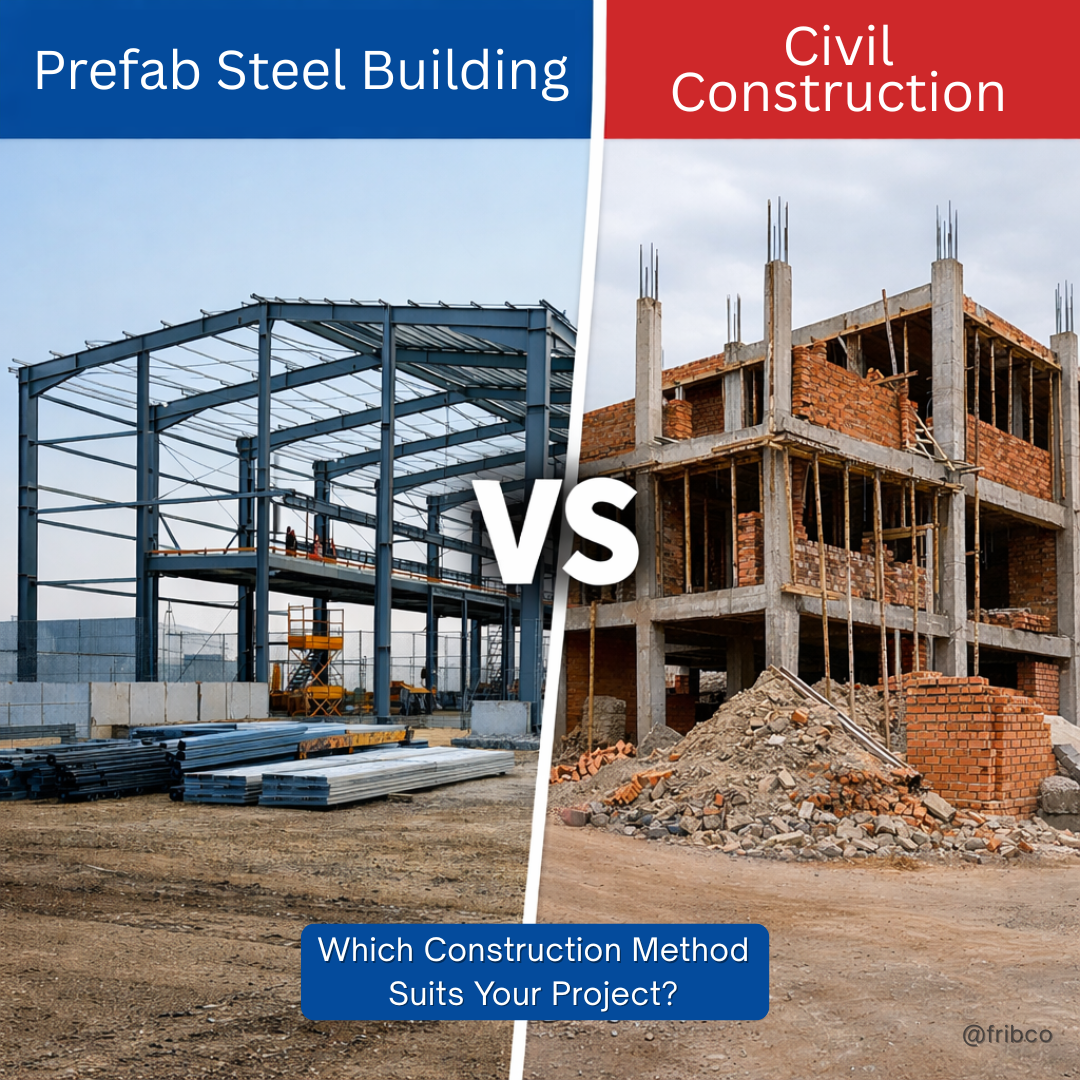
Benefits of PEB Buildings: Why More Businesses Are Choosing Pre-Engineered Steel Structures
Introduction
The construction industry has evolved significantly over the last few decades, with businesses increasingly seeking faster, more efficient, and more reliable building solutions. Among the many innovations that have transformed modern construction, Pre-Engineered Buildings (PEB) have emerged as one of the most practical and versatile options for industrial, commercial, and institutional projects.
From warehouses and factories to logistics centers, showrooms, aircraft hangars, and agricultural facilities, PEB structures are being adopted worldwide because they offer a combination of engineering precision, durability, flexibility, and speed that conventional construction methods often struggle to match.
As industries continue to prioritize operational efficiency and long-term performance, PEB buildings provide a modern construction solution capable of meeting demanding project requirements while maintaining high structural standards.
What Is a Pre-Engineered Building?
A Pre-Engineered Building is a steel structure designed and manufactured using advanced engineering software and fabricated in a controlled factory environment before being transported to the project site for assembly.
Unlike conventional construction, where most structural elements are built on-site, PEB components are engineered, manufactured, and quality-checked before delivery. This approach minimizes uncertainties during construction and ensures greater accuracy throughout the project lifecycle.
The primary components of a PEB structure typically include:
- Primary steel framing
- Secondary structural members
- Roofing systems
- Wall cladding systems
- Bracing systems
- Mezzanine structures (where required)
- Crane support systems (for industrial applications)
Faster Project Completion
One of the most significant advantages of PEB construction is the speed of project execution.
Since major structural components are fabricated before arriving at the site, on-site construction activities are significantly reduced. This allows project teams to focus on assembly rather than fabrication, resulting in shorter construction schedules.
For businesses planning new manufacturing facilities, warehouses, or commercial buildings, faster completion means operations can begin sooner. Reduced construction timelines also help minimize disruptions and improve overall project efficiency.
In competitive industries where time directly impacts profitability, the ability to occupy a facility months earlier can provide a valuable strategic advantage.
Superior Engineering Precision
Modern PEB structures are designed using sophisticated engineering software that optimizes structural performance while maintaining safety and reliability.
Each component is manufactured according to precise specifications, reducing the likelihood of dimensional inconsistencies that can occur with traditional construction methods.
This level of engineering precision offers several benefits:
- Improved structural integrity
- Better load distribution
- Enhanced seismic performance
- Consistent quality standards
- Reduced construction errors
The result is a building system that delivers predictable performance throughout its operational life.
Flexible Design Possibilities
A common misconception is that steel buildings offer limited design flexibility. In reality, modern PEB systems can accommodate a wide variety of architectural and functional requirements.
PEB structures can be customized for:
- Manufacturing facilities
- Warehouses
- Logistics centers
- Commercial plazas
- Retail outlets
- Sports facilities
- Agricultural buildings
- Educational institutions
- Aircraft hangars
- Industrial workshops
Large clear spans can be achieved without numerous internal columns, creating open spaces that maximize operational efficiency and flexibility.
This adaptability makes PEB an attractive solution for businesses that may need future modifications or expansions.
Easier Future Expansion
Business requirements often change over time. Manufacturing output increases, inventory grows, and operational needs evolve.
PEB structures are particularly well suited for future expansion because additional bays and sections can often be integrated into the existing structure with minimal disruption.
Instead of demolishing and rebuilding entire facilities, businesses can expand strategically while maintaining ongoing operations.
This scalability provides long-term value and allows organizations to align facility growth with business growth.
Improved Structural Performance
Steel is one of the strongest construction materials available, offering excellent strength-to-weight characteristics.
PEB structures are designed to withstand various environmental and operational loads, including:
- Wind loads
- Seismic activity
- Roof loads
- Equipment loads
- Crane loads
- Temperature variations
Properly engineered steel buildings provide excellent structural stability while maintaining relatively lightweight construction compared to many conventional building systems.
This combination of strength and efficiency contributes to long-term building performance.
Better Space Utilization
For industrial and commercial facilities, efficient use of space is critical.
PEB structures allow for large column-free areas that maximize usable floor space. This is particularly important for:
- Warehousing operations
- Manufacturing facilities
- Distribution centers
- Equipment storage
- Commercial showrooms
The ability to create wide, unobstructed spaces improves workflow, enhances operational efficiency, and provides greater flexibility for future layout modifications.
Businesses can optimize every square foot of their facility without being constrained by excessive internal structural elements.
Consistent Manufacturing Quality
Traditional construction projects often involve significant on-site fabrication, where weather conditions, labor availability, and site constraints can affect quality.
PEB components are manufactured in controlled factory environments where strict quality control measures are implemented throughout the production process.
This controlled approach helps ensure:
- Consistent dimensional accuracy
- Reliable welding quality
- Improved material control
- Better surface finishes
- Reduced fabrication defects
As a result, building owners receive a structure that meets defined engineering specifications and quality standards.
Durability and Longevity
When properly designed, fabricated, and maintained, steel structures can provide decades of reliable service.
Modern protective coatings and corrosion protection systems help enhance the durability of steel components in various environmental conditions.
PEB structures are known for their ability to withstand demanding industrial environments while maintaining structural integrity over extended periods.
This long service life contributes to a strong return on investment and reduces the need for major structural repairs.
Energy Efficiency Opportunities
Modern PEB systems can incorporate various insulation and roofing solutions designed to improve thermal performance.
These include:
- Insulated roof panels
- Insulated wall systems
- Reflective roofing materials
- Ventilation systems
- Daylighting solutions
Improved energy efficiency can contribute to a more comfortable indoor environment while supporting sustainable building objectives.
For industrial facilities operating large spaces, energy-efficient building systems can play an important role in overall operational performance.
Suitable for Diverse Industries
One reason PEB construction continues to gain popularity is its versatility across multiple sectors.
Industries benefiting from PEB structures include:
Manufacturing
Factories require durable structures capable of accommodating heavy equipment, overhead cranes, and large operational areas.
Logistics and Warehousing
Distribution centers benefit from large clear spans, efficient storage layouts, and future expansion flexibility.
Commercial Development
Retail spaces, showrooms, and commercial facilities can utilize modern steel construction while maintaining attractive architectural appearances.
Agriculture
PEB structures are commonly used for storage facilities, processing plants, livestock shelters, and agricultural warehouses.
Aviation
Aircraft hangars require large unobstructed spaces that are ideally suited to steel building systems.
Reduced Construction Risks
Construction projects often encounter delays due to weather, material shortages, coordination challenges, and site-related issues.
Because a substantial portion of PEB fabrication occurs before site installation begins, many common project risks can be reduced.
This leads to:
- Better project planning
- Improved schedule predictability
- Enhanced quality control
- Greater construction efficiency
For business owners and project stakeholders, reduced uncertainty is often a major advantage.
Why Businesses Are Increasingly Choosing PEB Buildings
Today’s businesses need facilities that can adapt to changing market demands while supporting long-term operational goals.
PEB buildings provide a practical combination of:
- Speed
- Structural reliability
- Design flexibility
- Expandability
- Space efficiency
- Durability
- Engineering precision
These advantages make them particularly attractive for organizations seeking modern infrastructure solutions without compromising quality or performance.
Conclusion
Pre-Engineered Buildings have transformed the way industrial and commercial facilities are designed and constructed. Their ability to deliver speed, precision, flexibility, durability, and long-term value has made them one of the most preferred construction solutions across multiple industries.
Whether developing a manufacturing plant, warehouse, logistics center, commercial facility, or industrial workshop, a properly engineered PEB structure offers the performance and adaptability needed to support future growth.
As construction technologies continue to evolve, PEB systems are expected to play an even greater role in helping businesses build smarter, faster, and more efficiently.
Looking for a Reliable PEB Construction Partner?
FRIBCO provides complete PEB building solutions including steel fabrication, structural erection, roofing systems, wall cladding, mezzanine floors, crane-supporting structures and project management. Contact our team today to discuss your next industrial or commercial construction project.
[911970]supplies professional anti-violence equipments and solutions for the whole world with strong and perfect production capacity. anti-violence.org
Finally found a place that actually delivers on its promises. The excitement is real and the payouts are fair. Highly recommend aerox88slot to everyone.
Finally found a slot site that actually pays out! The interface is very friendly for mobile users. I’m having a blast on phjl88slot right now.
Everything about this site is clean and professional. I didn’t encounter any bugs during my session today. Cheers to detik11login for the great service.
Best slot action I have had in a long time. The graphics are crisp and the win rate feels fair. Big fans of minion178slot over here.
The graphics are super smooth and the games are really addictive. Highly recommend it to anyone looking for some fun. bdbk66game
Login is super fast and I never encounter any glitches. It is refreshing to find a site that actually works as intended. Go to pasar123login